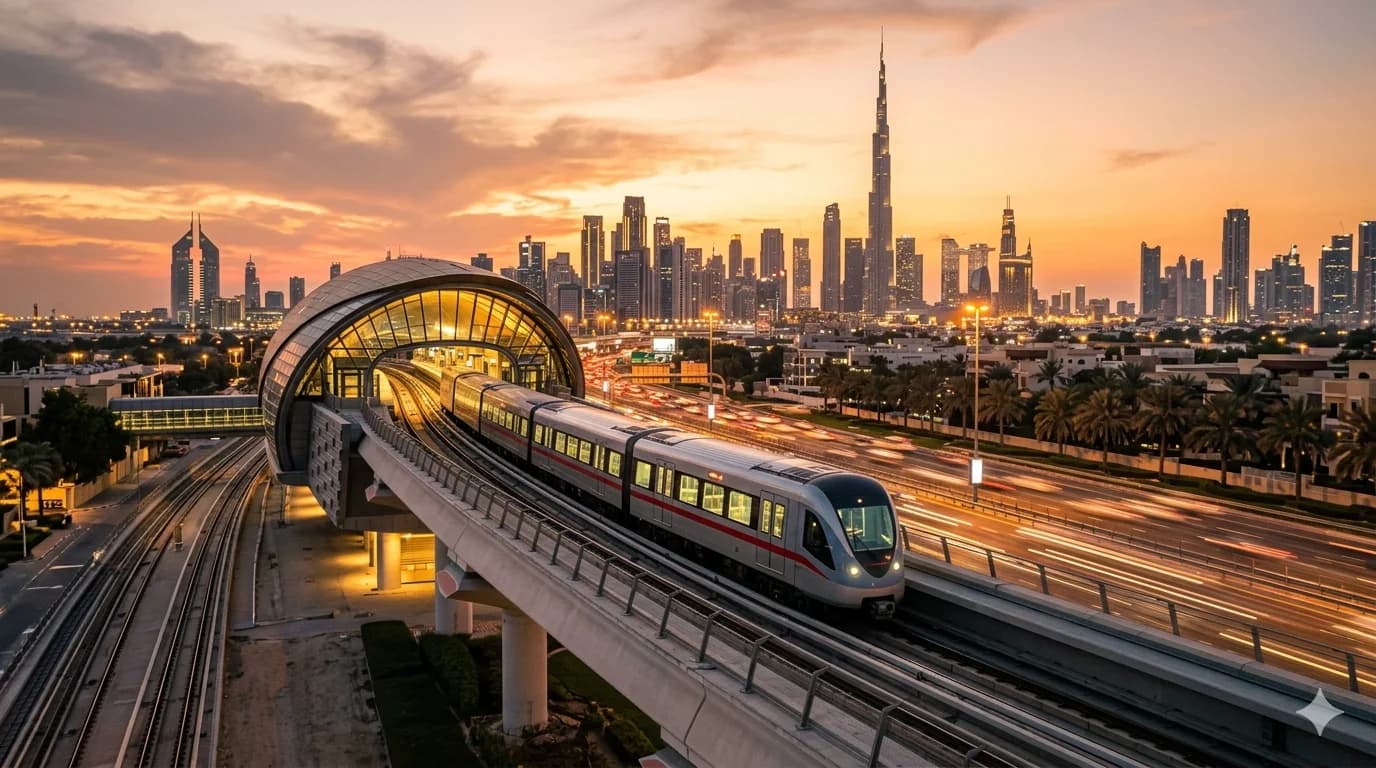
Dubai's metro is the cleanest, most punctual, and most underused transport system in the world. Visitors rent cars, locals take taxis, and almost everyone misses the fastest way across the city — an AED 3 train that runs on time, every time, in air-conditioned silence.
I've ridden every station on both lines, at morning rush hour and at midnight, and timed journeys against taxis and Ubers on identical routes. Here's what I found: the metro wins on time for most routes through the heart of Dubai, and it wins on cost every single time. The problem isn't the metro. The problem is that nobody has ever explained it properly.
This guide fixes that. Whether you're a tourist trying to get from the airport to the Dubai Mall, a new resident figuring out your commute, or someone who's lived here three years and still doesn't own a Nol card — this is everything you need to know. Fares, station names, and timings current as of May 2026 — always verify the latest via the S'hail app or RTA website as these change periodically.
At a Glance: The Dubai Metro in Numbers
Before we go deep, here's the whole system at a glance.
| Lines | Red Line (35 stations, 67.1 km) + Green Line (20 stations, 22.5 km) |
| Hours | Mon–Thu: 5am–midnight · Fri: 5am–1am · Sat: 5am–midnight · Sun: 8am–midnight |
| Minimum fare | AED 3.00 (within 1 zone, Nol Silver card) |
| Maximum fare | AED 7.50 (crossing more than 2 zones, Nol Silver card) |
| Airport to Burj Khalifa | AED 7.50 · ~30 minutes |
| Airport to Dubai Mall | AED 7.50 · ~30 minutes |
| Nol Silver card | AED 25 (includes AED 19 credit) — best option for most people |
| Gold Class carriage | First carriage · double the standard fare · worth it at rush hour |
| Women & children carriage | Rear carriage · no extra charge · exclusively for women and children |
| Passes available | 7-day / 30-day / 90-day unlimited passes · add to Silver or Gold card |
The Two Lines: Red vs Green — What Goes Where
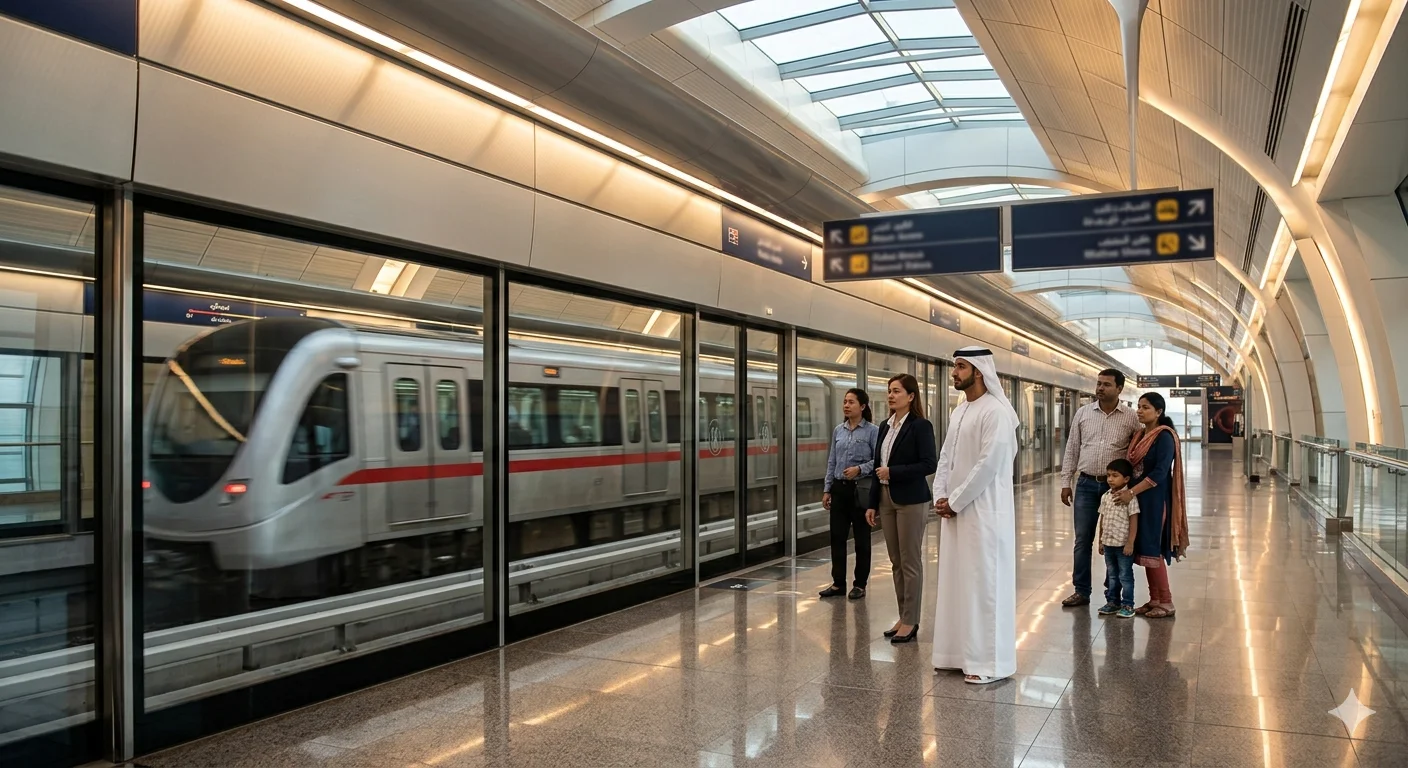
The Dubai Metro has two lines. Most people only need to know one of them.
The Red Line is the one that matters for almost every journey. It runs 67.1 km from Centrepoint (near Rashidiya/the airport) in the northeast, all the way down Sheikh Zayed Road to its southwestern termini at Life Pharmacy and Expo City. Thirty-five stations. This is the backbone of the system — it covers the airport, DIFC, Downtown Dubai, Business Bay, Mall of the Emirates, and Dubai Marina.
The Green Line is shorter and loops through old Dubai. It runs 22.5 km through Deira, the Creek, Al Fahidi, and Dubai Healthcare City before connecting back to the Red Line. If you're visiting the Gold Souk, spice souk, or Al Fahidi Heritage District, this is your line.
The two lines cross at two points: Union station and BurJuman station. Both allow free transfers — tap out on one line, tap in on the other using the same Nol card.
The 13 Red Line Stations That Actually Matter
You don't need to memorise all 35 stations. You need to know these:
| Station | What's There |
|---|---|
| Airport Terminal 1 | DXB Terminal 1 arrivals |
| Airport Terminal 3 | Emirates airline hub, DXB T3 departures |
| Union | Green Line transfer point, central Deira |
| BurJuman | Green Line transfer, Bur Dubai shopping |
| World Trade Centre | DWTC, Zabeel Park |
| Emirates Towers | DIFC adjacent, the luxury hotel strip |
| Financial Centre | DIFC Gate Village, Four Seasons |
| Burj Khalifa / Dubai Mall | Dubai Mall, Burj Khalifa, Dubai Fountain |
| Business Bay | Canal waterfront, Business Bay towers |
| Onpassive | Al Quoz industrial arts district (Alserkal Avenue nearby) |
| Mall of the Emirates | Mall of the Emirates, Ski Dubai |
| Sobha Realty | Dubai Tram connection → JBR, Dubai Marina Walk |
| Expo City / Life Pharmacy | Expo 2020 site / Jebel Ali terminus |
The 6 Green Line Stations That Actually Matter
| Station | What's There |
|---|---|
| Al Ras | Gold Souk entrance, Deira heritage area |
| Baniyas Square | Central Deira, budget hotels |
| Union | Red Line transfer hub |
| BurJuman | Red Line transfer, Khalid Bin Al Waleed shopping |
| Sharaf DG | Heritage district / Dubai Museum (formerly Al Fahidi station) |
| Dubai Healthcare City | Medical cluster, Al Jaddaf area |
The Nol Card — Your Metro Wallet
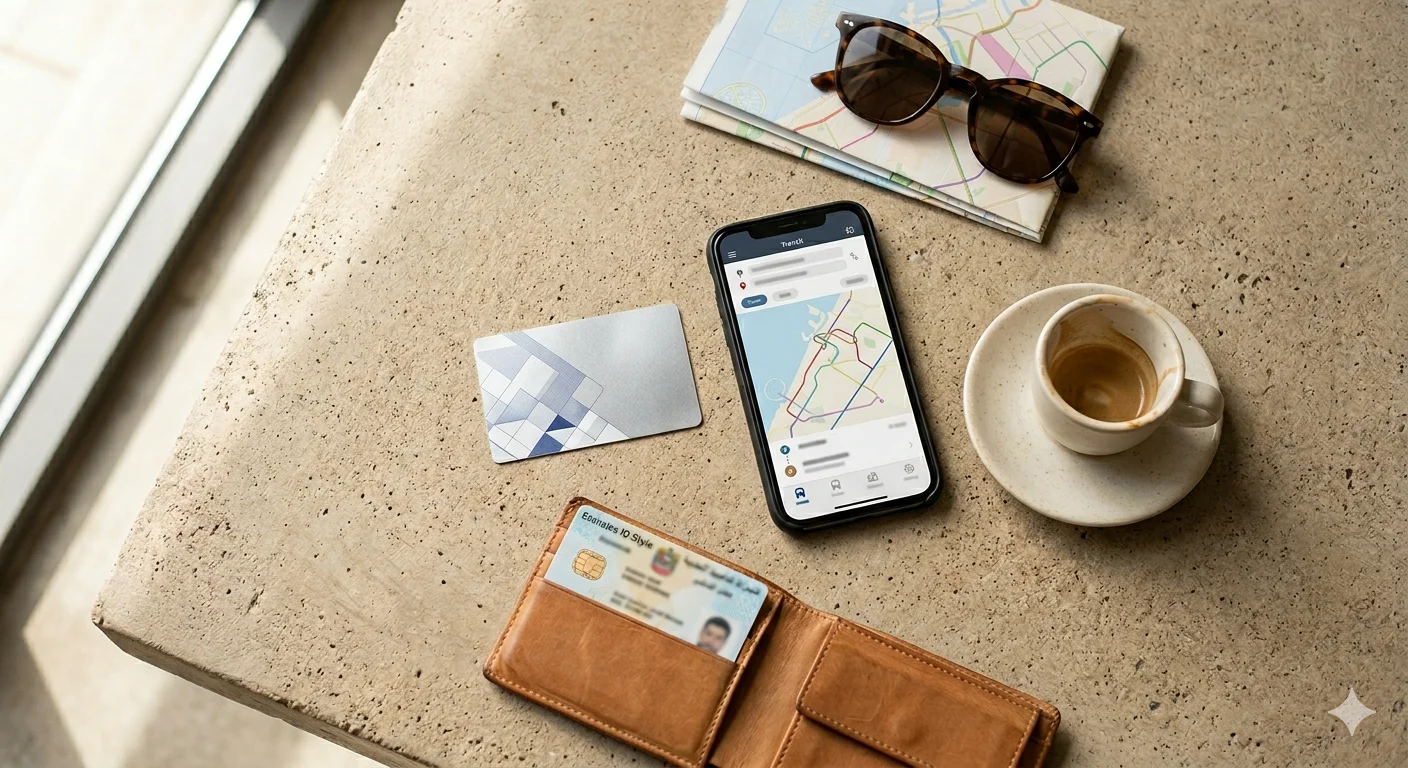
What is a Nol card? A Nol card is Dubai's reusable RFID smart card for paying on the metro, bus, tram, water bus, and even some car parks. The Silver card costs AED 25 (with AED 19 of credit included) and is the best option for most users.
You tap in when you enter a station and tap out when you leave. Both taps are mandatory. Miss the tap-out and the system charges you the maximum zone fare — an expensive lesson most people learn once.
Which Nol Card Should You Get?
| Card Type | Cost | Best For | Key Detail |
|---|---|---|---|
| Nol Red Ticket | AED 2 (card only); fares from AED 4 | One-off tourists | Rechargeable (up to 10 trips or 5 daily passes) |
| Nol Silver Card | AED 25 (AED 19 credit) | Most people | Reloadable, works on all RTA transport |
| Nol Gold Card | AED 25 (AED 19 credit) | Gold Class travellers | Same card — tap on the gold platform zone |
| Nol Personal (Blue) Card | AED 70 (AED 20 credit) | UAE residents with ID | Registered to you; eligible seniors/students get 50% off fares |
Fares Table (2026)
| Journey | Nol Silver / Blue | Nol Gold Card | Nol Red Ticket |
|---|---|---|---|
| Within 1 zone | AED 3.00 | AED 6.00 | AED 4.00 |
| 2 adjacent zones | AED 5.00 | AED 10.00 | AED 6.00 |
| More than 2 zones | AED 7.50 | AED 15.00 | AED 8.50 |
Passes: RTA offers 7-day, 30-day, 90-day, and 1-year unlimited travel passes that can be added to any Silver or Gold card. A 30-day all-zone pass costs AED 350 on a Silver card — good value for daily commuters. Add them at any ticket machine, through the S'hail app, or at the ticket office.
Gold Class vs Standard — Is the Upgrade Worth It?
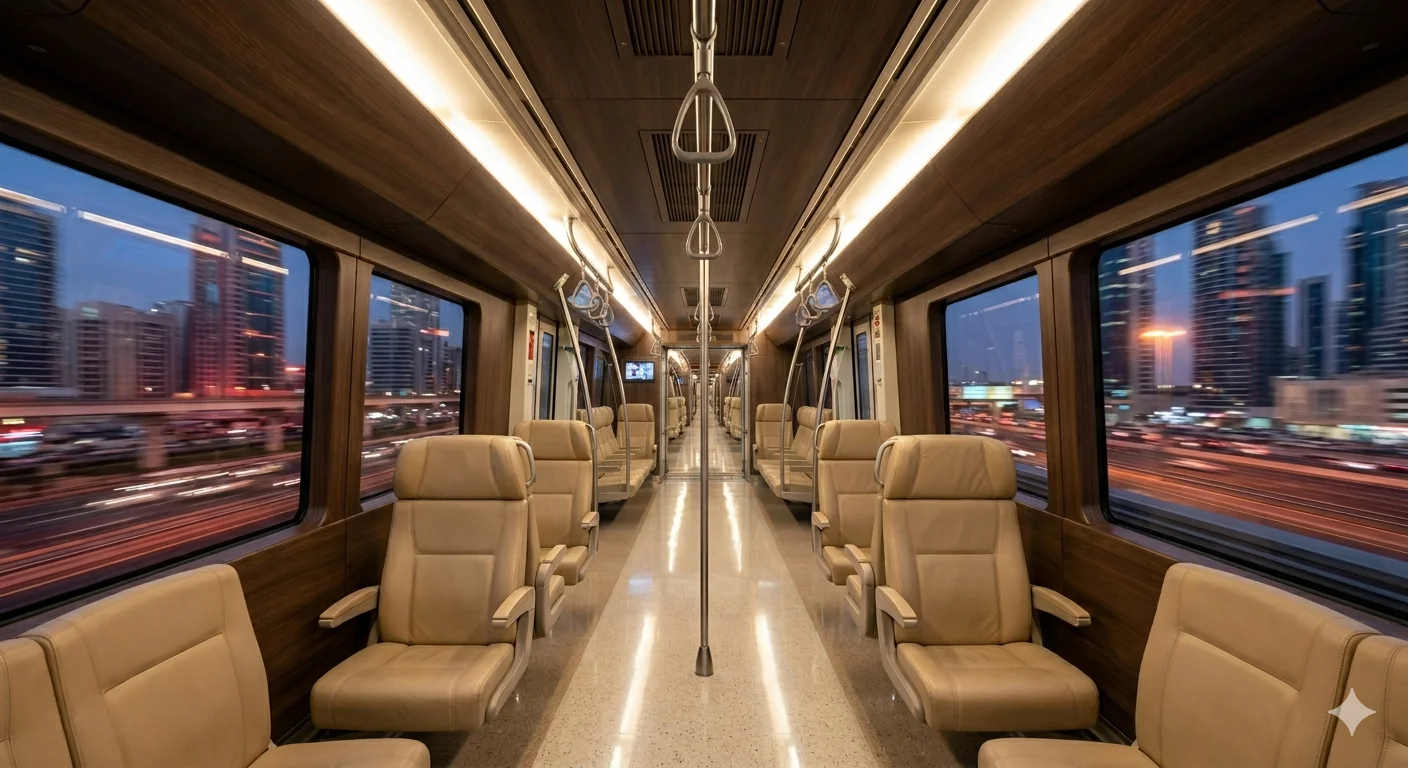
The first carriage of every Dubai Metro train is Gold Class. The seats are wider, the carriage is less crowded, and the experience is noticeably calmer. The cost is double the standard fare — so a journey crossing more than 2 zones that costs AED 7.50 in standard costs AED 15.00 in gold.
Is it worth it? It depends entirely on when you're travelling.
At 2pm on a Tuesday, standard class is fine — the train is half empty. At 8:30am on a Monday when the Red Line between the airport and DIFC is standing-room-only and someone's elbow is in your laptop bag — gold class is absolutely worth the premium.
How to use it: Tap your Nol card on the gold zone reader at the platform (marked with a yellow stripe on the floor). This registers you for gold class automatically. Then board the first carriage.
The Women & Children's Carriage
The rear carriage of every train is exclusively reserved for women and young children. It's free — no surcharge, no separate card. Women who want a quieter, less crowded journey during rush hour should know this option exists.
When Does the Metro Run?
| Day | First Train | Last Train |
|---|---|---|
| Monday – Thursday | 5:00 am | 12:00 midnight |
| Friday | 5:00 am | 1:00 am |
| Saturday | 5:00 am | 12:00 midnight |
| Sunday | 8:00 am | 12:00 midnight |
Peak frequency (7:30–9:30am and 5:30–8pm): every 3–4 minutes on the Red Line.
Off-peak frequency: every 7–10 minutes.
During Ramadan, hours shift — trains typically run later into the night and the first train may be later in the morning. Check the RTA app for the current Ramadan schedule, which updates annually.
Flying In or Out? Airport Metro Connections
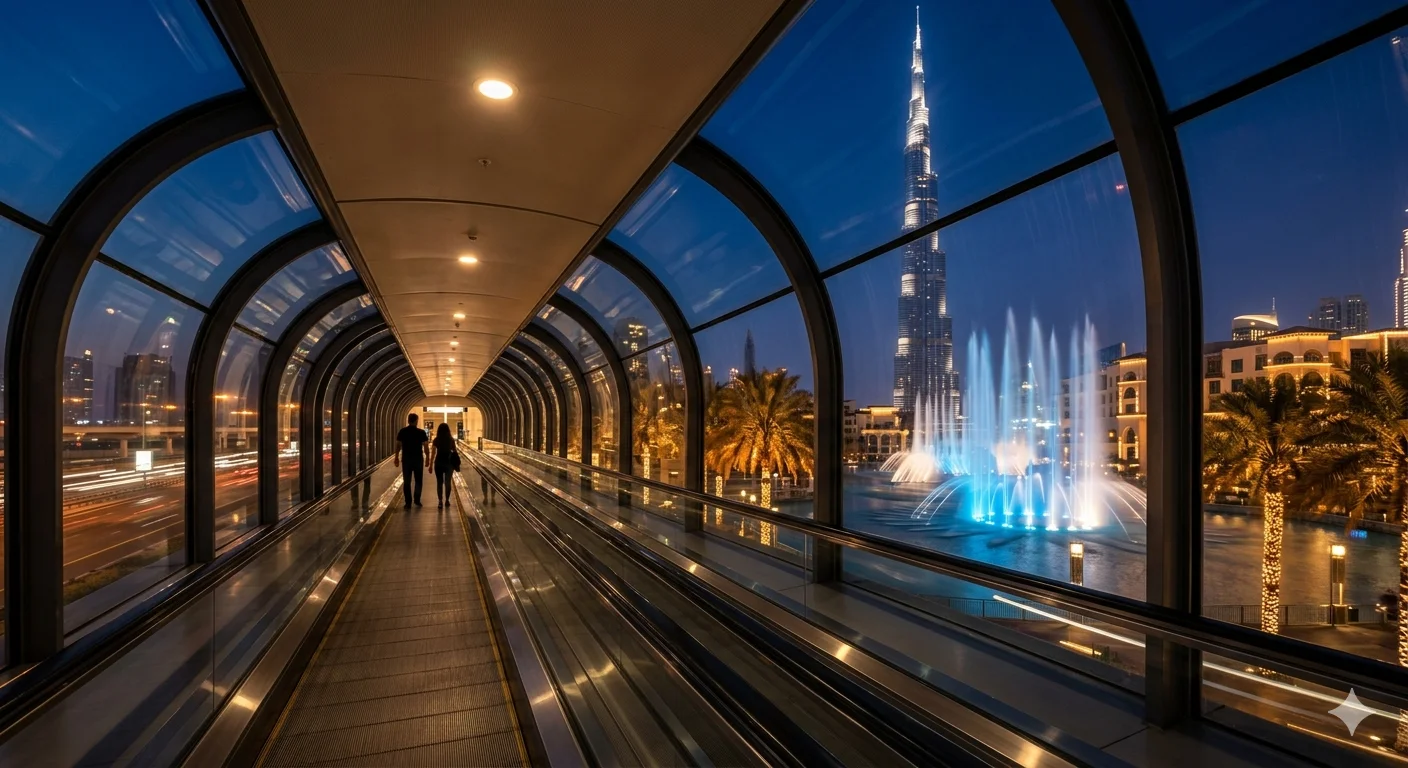
Does the Dubai Metro go to the airport? Yes — the Red Line stops directly at Terminal 1 and Terminal 3 of Dubai International Airport (DXB). The two stations are adjacent stops on the Red Line — follow airport signage between terminals.
Terminal 2 is not on the metro. Budget carriers including flydubai, Air Arabia, and some charter airlines use T2. From T2 you'll need a taxi, Uber, or bus — budget 30–45 minutes extra.
Key Airport Routes with Fares & Times
| Route | Stops | Fare (Silver) | Journey Time |
|---|---|---|---|
| T3 → Burj Khalifa / Dubai Mall | 13 stops | AED 7.50 | ~30 min |
| T3 → Financial Centre (DIFC) | 10 stops | AED 7.50 | ~23 min |
| T3 → Mall of the Emirates | 16 stops | AED 7.50 | ~37 min |
| T3 → Sobha Realty (Marina Tram) | 19 stops | AED 7.50 | ~50 min |
| T3 → Union (for Deira / Green Line) | 4 stops | AED 3.00 | ~8 min |
| T3 → Business Bay | 12 stops | AED 7.50 | ~28 min |
Luggage is allowed on the metro with no restriction — but peak-hour trains on weekday mornings are standing-room-only. If you're arriving with two large bags on a Monday morning, consider a taxi for your sanity.
Beyond the Metro: Tram, Bus & Water Bus
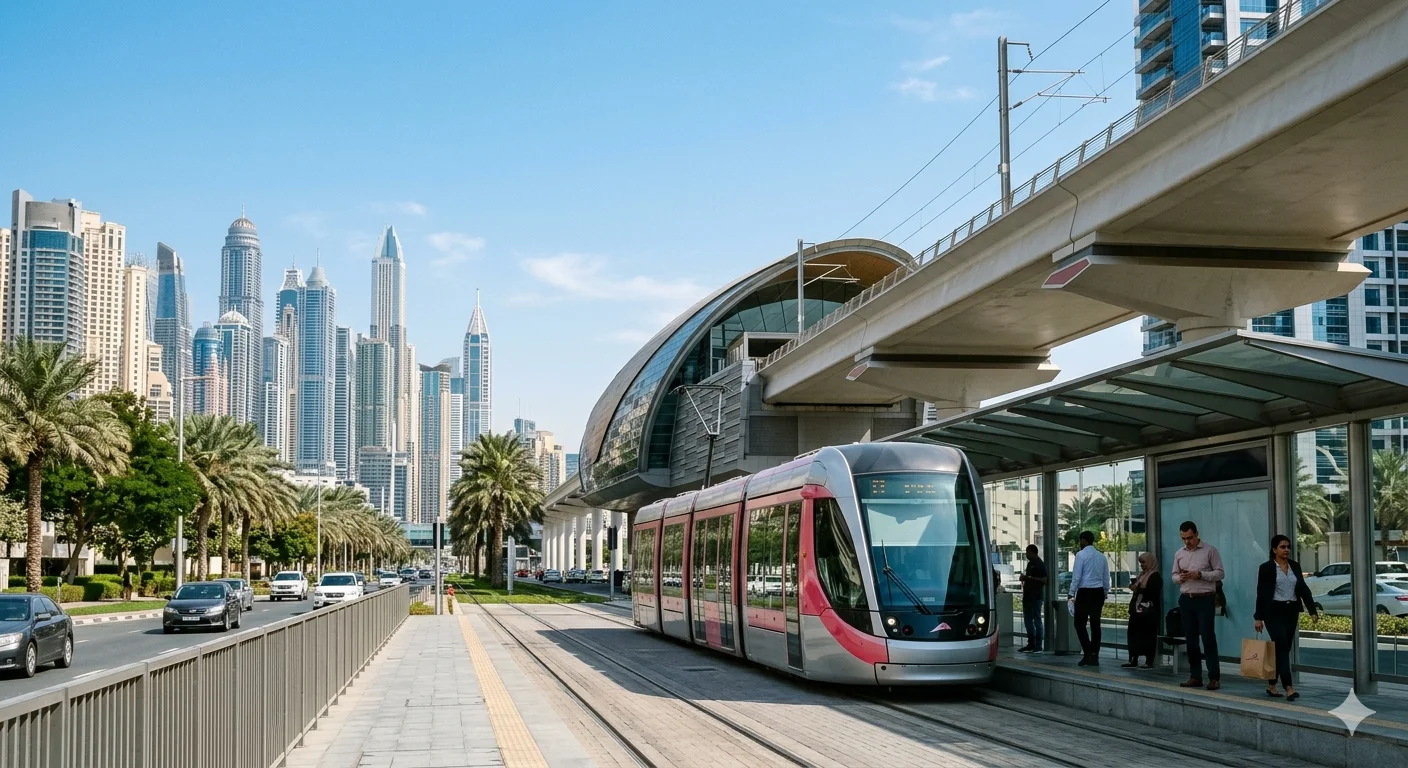
The metro connects to a wider RTA network — and your Nol card works on all of it.
Dubai Tram: Connects to the Red Line at Sobha Realty station. The tram runs along the Dubai Marina waterfront and JBR Walk before connecting to the Palm Monorail gateway. Frequency: every 7 minutes at peak. If you want to get from anywhere on the Red Line to JBR beach without a taxi, this is the route.
Palm Monorail: Connects from the tram at Palm Gateway to Atlantis at the top of the Palm. It's not covered by your standard Nol fare — a separate ticket costs AED 25 one-way. The Nol card won't work here.
RTA Buses: Extensive network covering areas the metro doesn't reach — JVC, Mirdif, Jumeirah, Al Quoz. The same Nol card works. Buses are slower than metro but valuable for the last mile. Trip Planner on the RTA app shows metro + bus combinations.
Water Bus / Water Taxi: Two different things. The water bus (Dubai Marina canal route, Creek route) accepts Nol card and is surprisingly pleasant. The traditional abra across the Creek in old Dubai is cash only — AED 1 per crossing, one of the great bargains of the city.
Dubai Ferry: Scenic route from Dubai Marina to Al Seef in old Dubai. Nol card accepted. Takes about 40 minutes — use this when you want to see the city from the water, not when you're in a hurry.
Metro vs Taxi vs Uber: The Honest Comparison
This is the question everyone actually has. Here's a real comparison on routes I've timed personally.
| Route | Metro Time | Metro Cost | Taxi/Uber Time | Taxi/Uber Cost | Verdict |
|---|---|---|---|---|---|
| Airport T3 → Burj Khalifa | ~30 min | AED 7.50 | ~25–40 min | AED 50–70 | Metro wins (cheaper, similar time) |
| Airport T3 → Dubai Marina | ~50 min | AED 7.50 | ~30–55 min | AED 70–90 | Metro wins on cost; taxi if you have bags |
| DIFC → Dubai Mall | ~8 min | AED 3.00 | ~15–30 min | AED 20–35 | Metro wins easily |
| JBR → Downtown Dubai | ~25 min (tram + metro) | AED 5.00 | ~20–40 min | AED 35–55 | Metro wins on cost |
| Marina → Mall of Emirates | ~12 min | AED 3.00 | ~15–25 min | AED 20–30 | Metro wins |
| DIFC → Airport T3 | ~20 min | AED 7.50 | ~15–25 min | AED 50–65 | Metro wins (if no luggage) |
| JVC → Downtown Dubai | No direct metro | — | ~20–35 min | AED 30–45 | Taxi/Uber only (no metro access) |
The pattern is clear: for any journey that runs along Sheikh Zayed Road (the Red Line corridor), the metro is faster than a taxi at rush hour and dramatically cheaper at any hour. The metro loses in areas with no station coverage — JVC, Arabian Ranches, Mirdif, Jumeirah, and Al Quoz have no metro access at all. If you live in those areas, you're relying on a car or ride-hailing for most trips.
Don't Get Fined: Metro Rules
Dubai Metro inspectors board regularly and scan every Nol card. These are the fines you need to know.
| Violation | Fine (AED) |
|---|---|
| Eating or drinking | 200 |
| Littering | 200 |
| Smoking | 500 |
| Fare evasion (no valid tap) | 200 |
| Gold zone without correct fare | 200 |
| Women's carriage violation (men) | 200 |
| Loud music without headphones | 200 |
| Feet on seats | 100 |
| Transporting prohibited items | 200–500 |
Children under 5 travel free on all services at all times.
First Time? Here's Exactly What to Do
Never ridden the Dubai Metro before? This is the step-by-step.
Step 1 — Buy a Nol Silver card. Walk into any station and find the blue ticket vending machines. Select "Buy Nol Card." It costs AED 25 total — that includes AED 19 of credit already loaded. Pay by card or cash.
Step 2 — Find your platform. Follow overhead signs for "Red Line" or "Green Line." On the Red Line, look for your direction: Centrepoint (going northeast toward airport) or Life Pharmacy / Expo City (going southwest toward Marina and Expo).
Step 3 — Tap in. Hold your Nol card flat against the circular reader on the gate. A green light confirms you're in. If it flashes red, your card has insufficient credit — top up at the machine first.
Step 4 — Board the right carriage. Gold Class is the first carriage (yellow floor marker). The women's carriage is the last carriage (pink floor marker). Standard class is all carriages in between. Check before you board.
Step 5 — Tap out. This is the step people miss. When you exit, tap your Nol card on the gate reader at your destination station. Without a tap-out, the system doesn't know where you ended your journey and charges you the maximum zone fare automatically.
What's Coming: The Metro Expansion
Route 2020 (now operational): The extension to Expo City and the Jebel Ali corridor opened for Expo 2020 and is fully operational. If you work near the Expo City site or Jebel Ali, you can already reach the Red Line from Expo City station. Note: Al Maktoum Airport (DWC) is not yet directly on the metro — a road transfer from Expo City station is currently required.
The Blue Line (planned, ~2029–2030): This is the expansion that changes everything. The Blue Line will run east-west across Dubai — connecting areas that are currently car-dependent. Proposed key stations include Dubai Hills, Meydan, Al Quoz, Business Bay (new station), and potentially extending toward Deira Islands.
Green Line north extension: A planned extension northward beyond the current terminus at Creek station is in design phase.
15 Things That Make You a Dubai Metro Regular
-
Download the RTA Dubai app. Real-time journey planner, Nol top-up, live departure boards, and bus route planning. One app runs your entire public transport life in Dubai.
-
Tap in and tap out — every time. Failure to tap out on exit = maximum zone fare charged automatically. Ask anyone who's learned this the hard way.
-
Stand right, walk left on escalators. Dubai follows the same convention as London and Hong Kong. Standing on the left will earn you a queue of impatient looks.
-
Peak hours on the Red Line are serious. 7:30–9:30am and 5:30–8pm, the train between the airport and DIFC fills to capacity. If you're travelling with luggage during these windows, take a taxi instead.
-
Burj Khalifa station exit = 5-minute walk to Dubai Mall. The station dumps you into a covered air-conditioned walkway that connects directly to the mall. You don't exit to street level — it's seamless.
-
Mall of the Emirates station is at the wrong end of the mall. The metro entrance connects near Ski Dubai and Carrefour — the far end from the main entrance and the cinema. Budget extra walking time if your destination is the Marks & Spencer end.
-
Passes save money if you ride often. RTA offers 7-day and 30-day unlimited passes you can add to your Silver card. A 7-day all-zone pass costs AED 110 on a Silver card — often cheaper than paying per journey on a heavy-use week.
-
Nol card works for RTA car parks too. Many Dubai Municipality parking zones and some RTA car parks accept Nol card payment. Keep yours loaded for multi-use convenience.
-
The metro runs until 1am on Fridays. Late-night dinner in Downtown or JBR? You can take the metro home. Thursday nights are socially Dubai's biggest — the Friday 1am cutoff is timed perfectly for it.
-
There is no "Gold Line." A common tourist confusion. Gold Class is a carriage designation on the Red and Green Lines. It is not a separate line, not a different route, and not on a different platform.
-
Check the RTA app before you go on public holidays. National Day, UAE New Year, Eid — the metro runs extended hours but the schedule shifts. Don't assume regular timings.
-
JVC, Jumeirah, Arabian Ranches, and Mirdif have no metro. These are large, popular residential areas with zero metro access. If you've just moved to Dubai and you're choosing between apartments, this is the single most practically important thing to check.
-
The tram at Sobha Realty is the fastest way to JBR without a taxi. Walk 2 minutes from the Red Line platform, tap in, three stops to JBR Walk. Total time saved versus taxi during peak: 15–30 minutes.
-
Children under 5 travel free, always. No ticket, no Nol card needed for under-5s. Children 5–11 pay child fares on their own registered Nol Blue card.
-
The Blue Line changes everything — but not until 2029. Neighbourhoods like Dubai Hills and Meydan are marketing themselves on upcoming metro access. That's 3+ years away. Plan accordingly and don't pay a metro premium for infrastructure that isn't built yet.
Frequently Asked Questions
How much does the Dubai Metro cost in 2026?
Fares start at AED 3 for a journey within one zone on a Nol Silver card and rise to AED 7.50 for a journey crossing more than 2 zones — including the full Red Line trip from Dubai International Airport to Dubai Marina. For frequent travellers, RTA offers day, week, and month passes. Check the S'hail app for current pass prices.
Does the Dubai Metro go to Dubai International Airport?
Yes. The Red Line has two stations inside Dubai International Airport: Terminal 1 and Terminal 3. They are adjacent stops connected by a walkway inside the terminal. Terminal 2 is not on the metro — take a taxi or Uber from T2.
Can I drink water on the Dubai Metro?
Technically no — eating and drinking are prohibited on the metro with a AED 200 fine for violations. A sealed bottle of water kept inside a bag is generally tolerated, but holding an open drink or eating anything is enforced. Keep it in your bag.
What is the difference between a Nol Silver, Gold, Red and Blue card?
Red Ticket: paper card (AED 2 card cost), rechargeable for up to 10 trips; fares are slightly higher than card-based. Silver Card: reloadable, AED 25 (includes AED 19 credit), best for most people. Gold Card: same price as Silver but for Gold Class travel. Personal/Blue Card: AED 70 (includes AED 20 credit), requires Emirates ID — eligible resident seniors and students get 50% off fares. All cards work on metro, bus, tram, and water bus.
Is the Dubai Metro running on Sundays?
Yes, but with a later start and slower frequency. The first Sunday train departs at 8:00am (two hours later than other days). Off-peak frequency on Sunday is every 10–15 minutes versus every 3–4 minutes on weekday peaks. Avoid relying on it for an early morning Sunday flight.
Can tourists use the Dubai Metro?
Absolutely — the metro is one of the easiest things to use as a tourist. Buy a Nol Silver Card (AED 25, includes AED 19 credit) at any ticket machine for the best value. A Red Ticket paper card (AED 2 for the card; fares from AED 4 per journey) works for occasional use. Signs are in Arabic and English throughout, and announcements are bilingual.
How do I get from Dubai Marina to Burj Khalifa by metro?
Take the Dubai Tram from JBR Walk to Sobha Realty station (southbound). Transfer to the Red Line (direction Centrepoint) and ride to Burj Khalifa / Dubai Mall station — that's 5 stops. Total fare: AED 5.00 on a Nol Silver card. Total journey: approximately 20–25 minutes.
Is gold class on the Dubai Metro worth it?
At rush hour (7:30–9:30am and 5:30–8pm) on the Red Line, the surcharge is worth every dirham — standard class fills to standing room only on busy routes. Outside peak hours, standard class is comfortable and the upgrade is unnecessary. For airport journeys with luggage, gold class gives you space to manage bags without blocking an aisle.
Where can I buy a Nol card?
At the ticket vending machines inside any metro station (cash or card), through the RTA Dubai app, at Carrefour supermarkets, and at ENOC petrol stations. The app is the fastest option if you already know you want one before arriving at the station.
Does the Dubai Tram use the same Nol card?
Yes. The same Nol Silver, Blue, or Gold card works on the metro, Dubai Tram, RTA buses, water bus, and Dubai Ferry. The Palm Monorail is the one exception — it uses a separate ticket system (AED 25 per trip one-way) and does not accept Nol.